What Are the 4 Types of POS Systems and Which One Is Best? | Payment Bridge Processing
Every business that accepts payments, from a small shop in New York to a nationwide retail chain, depends on the right POS system. A point of sale (POS) system does more than take payments. It helps you run sales, manage inventory, track performance, and improve the customer experience across all channels.
With so many options available, it can be confusing to know which POS system is best for your business. Understanding the four main types of POS systems helps you make smarter choices and avoid costly mistakes.
POS systems explained
A POS system is where your business completes a transaction and records it. It can be a simple countertop terminal or a powerful integrated platform that connects online and in-store sales. According to payment industry standards, a good POS system should be reliable, secure, and flexible enough to grow with your business.
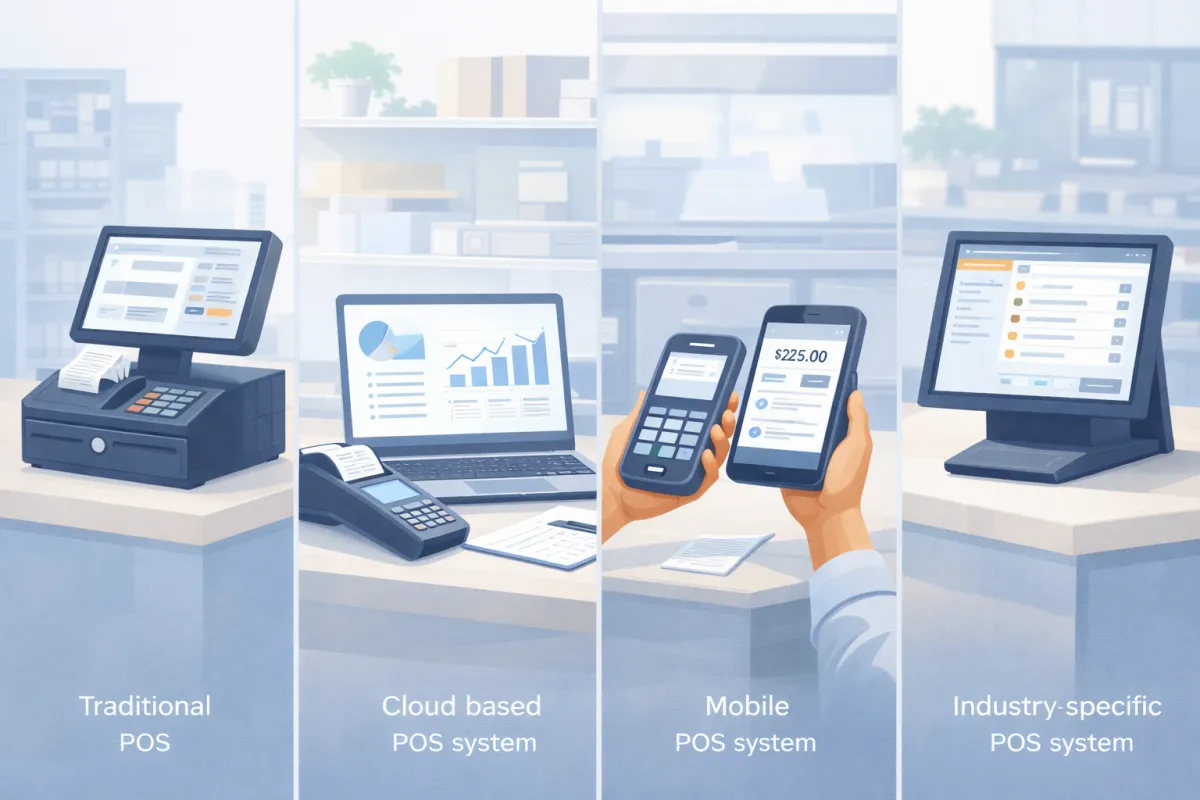
Here are the four main categories you should know about.
1. Traditional on-site POS systems
These systems consist of dedicated hardware such as terminals, cash drawers, scanners, and receipt printers. They are usually installed at your business location.
Best for:
• Retail stores with fixed checkout counters
• Restaurants and hospitality venues
• Businesses that primarily operate in person
Benefits:
• High reliability once installed
• Advanced hardware integrations
• Local processing with less dependence on internet connectivity
Traditional systems are ideal if your business needs robust, dependable hardware that handles high transaction volumes without interruptions.
2. Cloud-based POS systems
Cloud POS systems run online and store data securely in the cloud. You can access sales reports, inventory tracking, and customer data from anywhere with an internet connection.
Best for:
• Multi-location businesses
• Businesses with online and in-store sales
• Owners who need remote access
Benefits:
• Real-time data access from any device
• Automatic software updates
• Easier scalability as your business grows
Cloud POS solutions give businesses the flexibility to manage operations remotely and adapt quickly to changing needs.
3. Mobile POS systems
Mobile POS (mPOS) solutions let you accept payments right from a smartphone or tablet. These systems often integrate with mobile apps and can be paired with Bluetooth or wireless devices.
Best for:
• Pop-up shops
• Food trucks or on-the-go vendors
• Appointment-based services
Benefits:
• Portable and flexible
• Lower upfront cost
• Quick setup
A mobile POS gives businesses the freedom to meet customers wherever they are without needing a traditional countertop setup.
4. Industry-specific POS systems
Some POS solutions are tailored for specific industries, offering specialized features for restaurants, retail, salons, or e-commerce businesses.
Examples of features:
• Table management for restaurants
• Appointment scheduling for salons
• Inventory alerts for retail
• Integrated online store functions for e-commerce
Benefits:
• Tools designed for your exact workflow
• Reduced need for add-ons or workarounds
• Better reporting and analytics for specific needs
Industry-specific systems often deliver higher efficiency because they are built around common operational challenges in those business types.
Which POS system is right for your business?
There is no single best POS system for every business. The right choice depends on your size, sales channels, industry type, and future growth plans.
Ask yourself:
• Do you primarily sell in person or online?
• How many locations do you operate?
• Do you need advanced inventory management tools?
• Are mobile payments important for your customers?
For many businesses in New York and across the United States, a cloud-based system provides a balance of flexibility and control. Traditional systems may be best for high-traffic stores, while mobile systems offer unmatched portability for on-site sales.
Why POS systems matter for your bottom line?
Choosing the right POS system helps you:
• Speed up checkout and reduce lines
• Track sales performance in real time
• Manage inventory efficiently
• Offer modern payment options like contactless and digital wallets
• Improve customer experience and loyalty
Modern POS systems are more than payment terminals. They are tools that help your business operate smarter and grow.
POS solutions from Payment Bridge Processing
Payment Bridge Processing offers a wide range of POS systems suited for businesses of all sizes. Whether you need a traditional countertop setup, a powerful cloud-based solution, a flexible mobile POS, or an industry-specific configuration, there is the right choice for your business.
With transparent pricing and support across the United States and New York, Payment Bridge Processing ensures your POS system works just as hard as you do.
